
The Most Powerful Thing You Can Do Today Might Be to Remove Something
I have been in this industry long enough to watch the same mistake repeat itself with remarkable consistency. A new ship gets announced. The press release celebrates what has been added. More dining venues. More entertainment options. More square footage. More of everything—as if volume were the same thing as value.
That is not always the case.
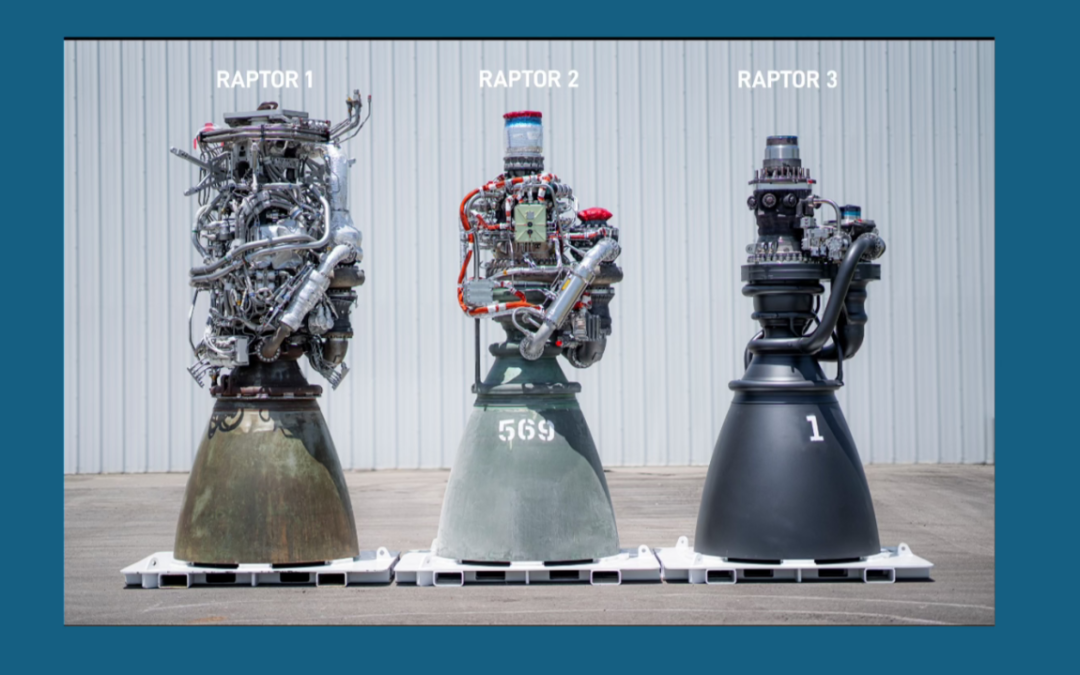
So when I came across a photograph circulating recently—one that Elon Musk reposted, originally highlighted by entrepreneur David Senra as “the most inspiring picture that exists”—it stopped me cold. Not because of the rockets. Because of what the rockets revealed about the way we think about progress.
The image shows three generations of SpaceX’s Raptor engine standing side by side. Each one is visibly leaner than the last. Cleaner. Simpler. And measurably more powerful—thrust climbed from 185 metric tons-force in the first generation to 280 in the third. That’s not progress in spite of the simplification. It’s progress because of it. Fewer components. Fewer failure points. Fewer places for complexity to hide.
SpaceX calls this philosophy the best part is no part. I’d call it something else: First Principles thinking applied without mercy. They didn’t benchmark competitors’ engines. They didn’t add features to match a spec sheet. They stripped the mission to its irreducible truth—reliable, high-performance propulsion—and asked what was actually required to achieve it. Everything that couldn’t answer that question was removed.
Enter Viking. While many cruise operators pursue spectacle, this premium/luxury Ocean and River voyages operator has boldly chosen a different course…
In an industry that spent decades convincing itself that guests wanted water slides and casinos and seventeen dining concepts and midnight comedy shows, Viking looked at a particular guest segment—the thinking traveler, the person who boards a ship to go somewhere rather than to be entertained into forgetting where they are—and made a different set of choices.
No casino. No children’s programs. No aggressive upselling. Every stateroom is a veranda suite. The design language across the fleet is consistent, almost deliberately understated: light wood, natural light, clean sightlines, residential calm. What Viking sells is not distraction. It is depth.
And here is where Cumulative Effect enters. Viking’s near-identical fleet configurations are not a failure of imagination—they are a strategic advantage. Once a superior design is validated, it is replicated and refined. Each new vessel compounds the learning of the last. Every iteration is faster, more precise, more confident because it is built on proven ground rather than invented from scratch. That is what cumulative compounding looks like in ship design: not reinvention, but relentless, disciplined improvement on a fixed foundation.
SpaceX operates identically. Raptor 2 did not start over from Raptor 1. It subtracted what didn’t work, kept what did, and compounded the gains forward. Raptor 3 did the same. The result is not three different engines—it is one evolving idea, growing sharper with each pass.
This is what I mean by Strategic Alchemy. Not the addition of clever features. The transformation of complexity into clarity, compounded deliberately over time.
Here is the midpoint truth most leaders avoid: subtraction requires more confidence than addition. Adding is easy to defend. You can always point to the feature, the amenity, the initiative and say we gave them more. Removing something means you are betting on focus. It means you believe your core is strong enough to carry the weight without the scaffolding. And it means you understand that every day you continue carrying unnecessary complexity is not a neutral day—it is a day actively working against your compounding power.
SpaceX bet on it. Viking bet on it. Both are winning.
The question for leaders reading this is not whether the philosophy is sound—the evidence is right there, on a launch pad and on open water. The question is whether you are willing to audit your own operation with that same First Principles honesty. What are you carrying that adds cost without proportional value? What complexity have you accumulated that you have simply stopped noticing?
As I often ask the executives I work with: Are you reacting to the market’s noise, or mastering its elements?
Subtraction is how you begin to master them.
What would you remove from your business today if you had the discipline and the conviction? I mean it as a genuine question—not rhetorical. Drop your answer in the comments. I read every one.
Strategic Alchemy Newsletter — Turning complexity into clarity.
Onward!